

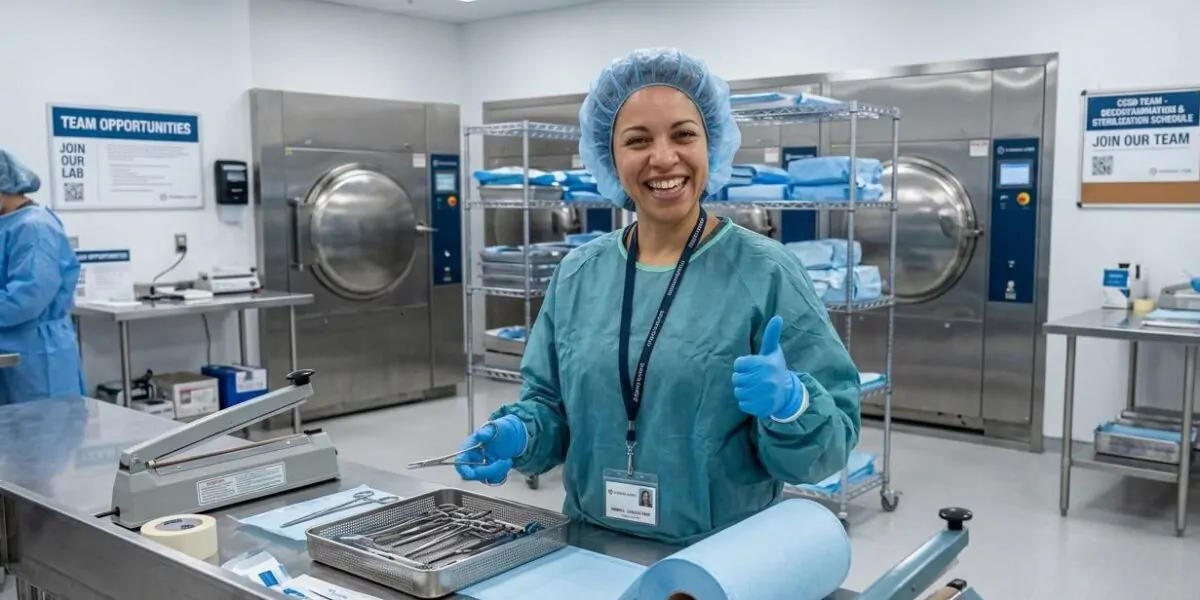
Sterile processing technician jobs are becoming increasingly important in modern healthcare. Hospitals, surgical centers, and outpatient clinics rely on trained technicians to clean, inspect, sterilize, and prepare surgical instruments used in medical procedures.
Because of this demand, sterile processing technician employment has grown steadily across the United States. Many healthcare facilities are actively hiring new technicians, including candidates looking for entry level sterile processing technician jobs or those transitioning into healthcare careers.
This guide explains what sterile processing technicians do, where to find jobs, what types of positions exist, and what the long-term sterile processing technician career path looks like.
What is a Sterile Processing Technician?
A sterile processing technician (SPT) is a healthcare professional responsible for cleaning, sterilizing, and preparing surgical instruments and medical equipment used in patient care.
Before any surgical procedure takes place, instruments must go through strict sterilization protocols to prevent infections and ensure patient safety. Sterile processing technicians work behind the scenes to make this possible.
Typical responsibilities include:
-
Cleaning contaminated surgical instruments
-
Inspecting equipment for damage
-
Assembling surgical trays
-
Operating sterilization machines (autoclaves)
-
Packaging instruments for operating rooms
Without sterile processing technicians, hospitals would not be able to safely perform surgeries or medical procedures. That’s why central sterile processing technician jobs are considered a critical support role within the healthcare system.
Types of Sterile Processing Technician Jobs
The sterile processing field offers several types of roles depending on experience level and certification.
Entry-Level Sterile Processing Technician Jobs
Many hospitals hire technicians at the beginning of their careers. Entry level sterile processing technician jobs typically focus on instrument cleaning, tray preparation, and assisting experienced technicians.
These roles are often the starting point for individuals building a sterile processing technician career.
Central Sterile Processing Technician Jobs
Most sterile processing departments operate within a hospital’s Central Sterile Supply Department (CSSD). Technicians working here handle large volumes of surgical instruments for multiple operating rooms.
Central sterile processing technician jobs involve:
-
Decontamination
-
Assembly of instrument trays
-
Sterilization monitoring
-
Documentation and tracking systems
These roles require strong attention to detail and familiarity with sterilization standards.
Certified Sterile Processing Technician Positions
Some employers prefer or require certification such as CRCST (Certified Registered Central Service Technician). Certified technicians may take on additional responsibilities and can qualify for higher-paying roles.
Certification often opens the door to more sterile processing technician employment opportunities across different healthcare facilities.
To receive the certificate, you must pass the exam. Multyprep has been preparing students for this exam for 10 years, and 90% of our students pass it on their first attempt.
Travel Sterile Processing Technician Jobs
Travel contracts have become increasingly common. Travel technicians work temporary assignments at hospitals experiencing staffing shortages.
These positions typically offer higher pay and relocation assistance. Travel jobs may require prior experience and certification.
Where to Find Sterile Processing Technician Jobs
Healthcare facilities across the United States regularly hire sterile processing technicians.
Common employers include:
Hospitals
Large hospitals operate central sterile departments and employ multiple technicians across different shifts.
Outpatient surgery centers
Ambulatory surgery centers also require instrument sterilization and tray assembly.
Specialty clinics
Some specialty practices perform minor surgical procedures and maintain smaller sterile processing units.
Sterile processing centers
Some facilities specialize in instrument reprocessing for multiple clinics.
In addition to direct applications, many candidates search online for sterile processing technician jobs through platforms such as:
-
Indeed
-
LinkedIn
-
Glassdoor
-
hospital career pages
These platforms allow candidates to filter sterile processing technician employment opportunities by location, experience level, and schedule.
Sterile Processing Technician Jobs Near Me — How to Search
Many job seekers begin with a simple search for sterile processing technician jobs near me.
To improve results, use filters such as:
-
Location radius
-
Experience level
-
Certification requirements
-
Shift availability
Healthcare staffing agencies can also help connect candidates with local hospitals.
Some tips for finding sterile processing technician jobs near your area:
-
Search directly on hospital career websites
-
Set job alerts on major platforms
-
Use location-based filters
-
Network with healthcare recruiters
Because sterile processing departments operate 24/7 in many hospitals, facilities often hire technicians across multiple shifts.
Entry Level Sterile Processing Technician Jobs — No Experience Required?
A common question among new job seekers is whether sterile processing technician jobs no experience are available.
In many cases, yes.
Some hospitals offer on-the-job training programs for entry-level technicians. These roles typically focus on basic tasks such as instrument cleaning and packaging.
However, many employers prefer candidates who have completed sterile processing training or obtained certification.
Why?
Sterilization procedures follow strict infection-control protocols. Technicians must understand:
-
sterilization cycles
-
chemical indicators
-
biological testing
-
instrument inspection
For this reason, many candidates pursue training programs before applying for entry level sterile processing technician jobs.
Training helps candidates learn sterilization standards and prepares them for certification exams such as CRCST.
Sterile Processing Technician Career Path
A sterile processing technician career often begins with an entry-level position and develops through experience and certification.
Typical career progression may include:
Entry-Level Technician
Responsible for cleaning instruments and basic tray preparation.
Certified Sterile Processing Technician
Handles more complex instrument sets and sterilization procedures.
Lead Technician
Supervises technicians and coordinates workflow in the department.
Sterile Processing Supervisor
Manages department operations, staff scheduling, and compliance procedures.
Sterile Processing Manager
Oversees large hospital departments and ensures regulatory compliance.
With experience and certification, technicians can specialize in areas such as:
-
surgical instrument inspection
-
endoscope reprocessing
-
sterile processing management
Many professionals stay in the field long-term due to job stability and strong demand for skilled technicians.
Frequently Asked Questions
Is sterile processing technician a good career?
Many professionals consider it a stable healthcare career with consistent demand. The role offers opportunities for advancement within hospital systems and surgical departments.
Can I get sterile processing technician jobs without certification?
Some employers hire entry-level technicians without certification, but many prefer candidates who are certified or currently pursuing certification.
How long does it take to start working in sterile processing?
Training programs vary in length. Some online programs can be completed in a few months, while community college programs may take longer.
Are sterile processing technician jobs physically demanding?
Technicians may spend long periods standing and handling instrument trays. Attention to detail and adherence to safety protocols are essential.
Where are most sterile processing technician jobs located?
Most positions are found in hospitals, surgical centers, and healthcare systems with operating rooms.
What skills are important for sterile processing technicians?
Important skills include attention to detail, organization, understanding sterilization procedures, and the ability to work in a fast-paced healthcare environment.
You can find answers to the remaining questions in our FAQ section.
Final Thoughts
The demand for sterile processing technician jobs continues to grow as healthcare systems expand surgical services and infection-control standards become more rigorous.
For individuals interested in a healthcare career without spending years in school, sterile processing offers a practical path into the medical field.
With opportunities ranging from entry level sterile processing technician jobs to supervisory roles, the field provides room for long-term career growth.
As healthcare facilities continue to rely on skilled technicians to maintain safe surgical environments, sterile processing technician employment is expected to remain an important part of the healthcare workforce.