

Career-Oriented Job Without a College Degree!
In the field of medical services, cleanliness and sterility are not just keys to success — in most cases, they are a matter of a patient’s life and death. Doctors understood this long before the pandemic.
We all appreciate the importance of maintaining cleanliness in our daily lives.
But we have never washed or disinfected our hands as often as we do now.
More and more hospitals place medical instrument sterilization in the hands of specially certified sterilization technicians, and all states support this initiative.
Five states — New York, New Jersey, Pennsylvania, Connecticut, and Tennessee — require mandatory certification to sterilize instruments.
Other states are in the process of implementing similar legislation.
Medical instrument sterilization technicians, or Sterile Processing Technicians, are now in such short supply that some states offer up to $7,500 in relocation assistance and even invite certified professionals to work as “traveling medics”.
Due to a shortage of medical professionals in the United States, the travel nursing movement has grown rapidly. Healthcare workers move from state to state, working for several months in hospitals where they are needed most. What started with nurses has expanded to other health professionals, including sterilization technicians.
If someone has a thirst for adventure and isn’t tied down to one place, this option is perfect — good pay, strong career prospects (we will discuss this in detail below), and the opportunity to see new places.
What are the responsibilities of a Sterile Processing Technician?
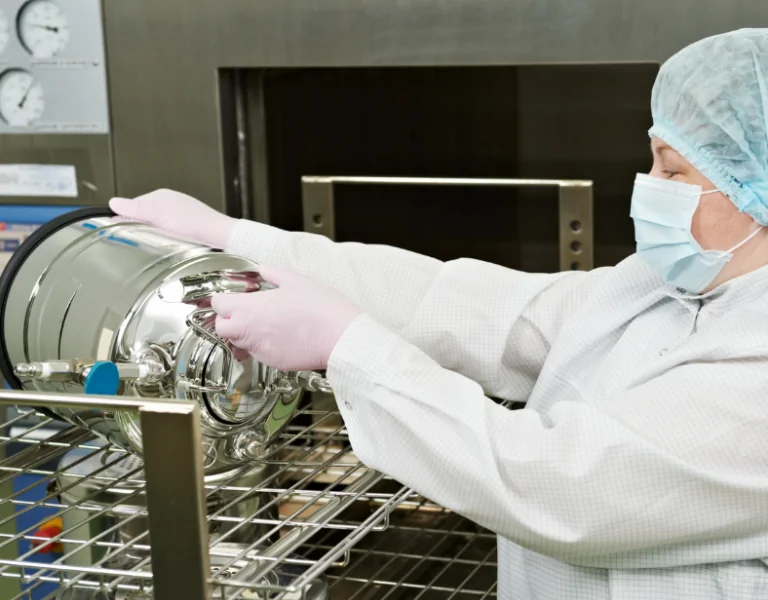
A Sterile Processing Technician is responsible for the daily sterilization of medical instruments after surgeries and procedures, as well as preparing medical supplies for reuse. This position is vital to the safety of patients and medical personnel and requires strict adherence to sterilization processes.
The rules for correct handling of instruments can only be learned in a special course, so it is imperative that certified specialists do this — and not just nurses when they have free time.
Where can a Sterile Processing Technician work?
Sterile Processing Technicians are needed in almost all medical institutions — hospitals, surgical, dental, and testing centers, outpatient clinics, etc.
This job is suitable even for those who are afraid of hospitals, blood, etc. Sterile Processing Technicians work in special sterilization departments where they do not contact any patients and do not perform surgeries or procedures. Therefore, no extreme situations or frightening scenes are involved in the sterilization process.
What is the salary of a Sterile Processing Technician in the USA?
The starting salary varies from state to state. For example, in New York, the average starting salary is $23–26 an hour. On average in the US, you can earn up to
$60 thousand per year.
Are there any bonuses or other benefits besides the salary?
Most healthcare providers offer the following additional benefits when hiring medical instrument sterilization specialists:
- medical insurance;
- dental insurance;
- vision (ophthalmic) insurance;
- paid vacation and holidays;
- paid sick leave;
- maternity leave.
Yes! This is a career-oriented job. After 2–3 years of work, you can become a team leader and earn up to $80,000 per year, or a shift supervisor with a salary of up to $95,000 per year. Those with management education can eventually take the position of deputy director of the sterilization department and earn up to $130,000 a year.
How to Become a Sterile Processing Technician in the USA?
Since 2016, Multyprep, Inc. has been offering an exam preparation course for the Sterile Processing Technician certification exam.
Anyone can take the course with just a high school diploma/GED. After a few weeks of online preparation and passing the international certification exam, you can start working in hospitals or surgical centers.
Multyprep, Inc. offers a 120-hour course that guides students through all stages of the sterilization process of medical instruments and covers all major exam topics.
Certified instructors answer all questions.
The Sterile Processing Technician course at Multyprep, Inc. lasts 14 weeks. If you can study only on Saturdays and Sundays, then the training will last 9 weeks.
But if you can allocate time for study on weekdays (Mondays, Wednesdays, and Fridays), then you can complete the course in 14 weeks. Each student receives all study materials and access to a huge number of additional resources, including over 1,000 custom-created questions for practice before the test.
In addition, after students pass the exam, the company writes a professional resume, prepares students for interviews, and provides real assistance with employment.